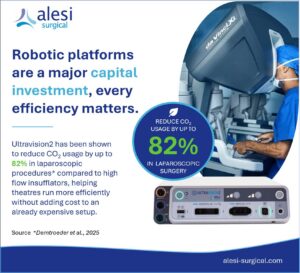
Greater Efficiency in Robotic Surgery Starts With Reducing CO₂ Use
Robotic platforms represent a significant investment for operating theatres, which makes every efficiency gained around them increasingly important.
New data shows that Ultravision2, developed by IW Capital portfolio company Alesi Surgical, has been shown to reduce CO₂ usage by up to 82% during laparoscopic surgery, compared with high-flow insufflators. The claim is based on findings from Demtroeder et al. (2025).
This means operating theatres can use significantly less CO₂ while supporting more efficient surgical workflows, without adding further costs to existing procedures.
For hospitals and surgical teams already operating with robotic platforms, this kind of improvement matters. It doesn’t require a change in equipment or additional investment, yet it directly addresses one of the practical, ongoing costs of running a laparoscopic surgical programme.
As robotic surgery continues to advance, reducing CO₂ use is another way for operating theatres to make the most of these significant investments, improving efficiency where it counts without adding complexity or cost.